


The Eminence in Shadow RPG
4.43.02K Reviews
App Specs
- Version
- 4.11.0
- Updated On
- License
- Free
- Downloads
- 1,000,000+
- Developer
- Crunchyroll Games, LLC
- Categories
- Role Playing
- Platform
- Android
Screenshots
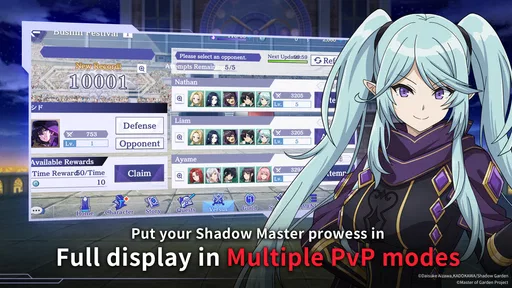
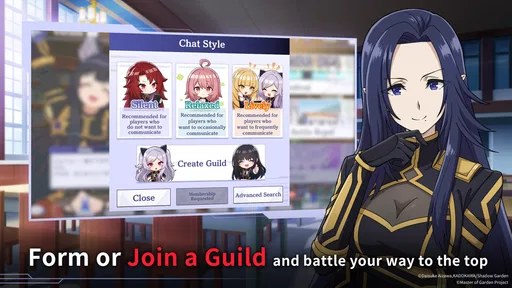
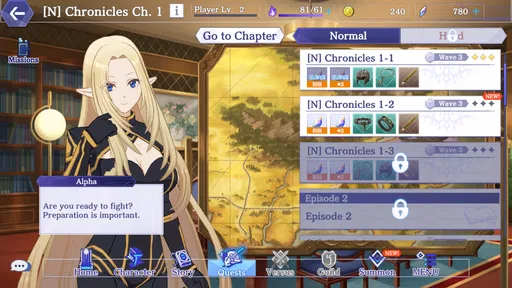
 Analysis by AppCompare
I went into The Eminence in Shadow RPG expecting a familiar anime role-playing game: recognizable characters, a dramatic story, and enough battles to keep me busy between other games. That first impression is accurate, but it does not explain the whole experience. The real question is whether a game built around an anime license can remain interesting once the excitement of meeting its cast starts to fade. After spending time with it, I see a title with a strong opening week, a comfortable mobile rhythm, and a few long-term concerns that depend heavily on how much you enjoy routine progression.
This is a free role-playing game from Crunchyroll Games, LLC, based on The Eminence in Shadow. It is aimed at fans of the anime, but it is not limited to people who already know every character. The presentation gives newcomers enough context to follow the basic conflict, while existing fans will naturally get more from the familiar faces and dramatic tone. The Teen age rating also fits the overall style: this is fantasy action with a darker edge, not a gentle all-ages adventure.
What makes the first week so appealing
The opening hours are where the game makes its best case. The anime setting gives the usual mobile RPG structure an immediate identity, and I found it easier to stay engaged because the battles, character scenes, and progression all feel connected to a recognizable world. Instead of starting with an entirely unknown cast, I had a reason to care about the people appearing on screen. That emotional shortcut matters more than it may seem, especially when many role-playing games begin with long tutorials and a parade of unfamiliar names.
The game also works well in short sessions. I could play through a few battles, improve my team, and stop without feeling that I had abandoned a complicated strategy project. That makes it a practical choice for a commute, a lunch break, or an evening when I want something more interactive than watching another episode of a show. The early progression is clear enough to encourage another session, and the constant feeling of unlocking something helps the first week move quickly.
My strongest early advice is to resist treating every new character or upgrade as equally important. Anime-based RPGs often encourage an emotional response to a favorite character, but a useful roster is usually about how its members work together. I had a better time when I looked at the team as a group rather than chasing every appealing addition. Before spending valuable resources, I would first ask whether a new unit actually solves a problem in the current lineup or simply looks attractive because of the source material.
That distinction is particularly important because the game is free to download and includes optional purchases ranging from $0.99 to $99.99 per item. A new player can enjoy the beginning without paying, but the presence of purchases changes the way I approach progression. I recommend setting a personal spending boundary before the first session, not after an exciting character appears. This simple habit keeps the game feeling like entertainment instead of turning every difficult stage into a reason to open the shop.
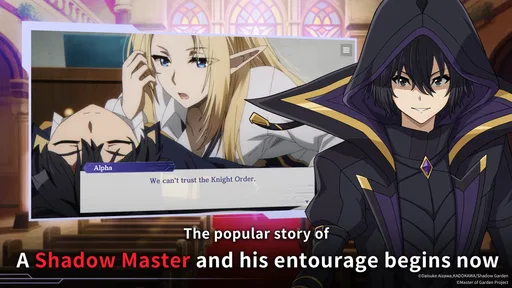
The story presentation is another reason the first week feels stronger than a generic RPG start. The setting gives battles a sense of purpose, and the cast brings personality to menus and progression screens that might otherwise feel purely functional. I would not describe the game as a replacement for the anime, though. It is better understood as a companion experience: it lets fans spend more time with the world, while the actual gameplay supplies the repeatable structure.
Worth Reading Before You Choose

EA SPORTS FC Mobile 26 Is a Bigger Football Game, but It Takes Time

Flipboard Shows What News Apps Must Do Beyond the Feed

Switching to Android Auto Means Rethinking Your Driving Routine

Google Calendar Makes a Crowded Week Easier to Manage

Ludo King Makes the Most of the Minutes Between Plans

Baby Panda World Brings Quick Play to Modern Phones, but Its Game Library Feels Busy
There is also a useful difference between playing for the story and playing for optimization. If I focus on the narrative and the pleasure of seeing familiar characters, the early game feels generous and relaxed. If I immediately compare every reward, team slot, and upgrade as if I were preparing for a competitive challenge, the experience becomes more demanding. Newcomers should begin with the first approach. The systems are easier to understand when they are introduced as part of an adventure rather than as a spreadsheet.
Who will enjoy the opening most
Fans of the anime are the obvious audience, especially those who like collecting characters and revisiting a favorite fantasy setting. I also think it suits players who enjoy structured mobile sessions rather than enormous open worlds. You can make progress without dedicating an entire evening, and the anime connection gives the routine a stronger personality than an original game with interchangeable heroes.
On the other hand, I would be cautious if you want a role-playing game with deep manual control in every encounter. The appeal here comes from building a capable group, making sensible improvements, and watching the team handle repeated challenges. Someone looking for a console-style adventure with constant exploration, detailed environmental interaction, or highly tactical moment-to-moment combat may prefer a premium RPG instead.
What remains valuable from month to month
The long-term value comes from the loop rather than from a single dramatic feature. I return to improve the roster, strengthen characters, and work through content at a manageable pace. That is a familiar structure for the genre, but the Eminence in Shadow setting gives the routine a reason to continue. When I am invested in the cast, a modest upgrade feels connected to the world; when I am not, the same upgrade can feel like maintenance.
That is why the game’s lasting appeal depends on your relationship with the license. The anime is not merely decoration here. It is the main source of motivation that carries the repeated battles and incremental improvements. If you enjoy the characters, the game has a comfortable monthly rhythm. If you only have passing curiosity about the series, the initial novelty may disappear before the progression loop has enough time to become satisfying.
I found it helpful to divide play into two different goals. On some days, I played actively to advance through available content and make meaningful team decisions. On other days, I treated the game as a light check-in: collect what had accumulated, use a few resources, and leave. This flexible approach is one of its practical strengths. It does not demand that every session become a major event, which makes it easier to keep installed than a game that requires a long uninterrupted commitment.
Still, flexible sessions do not automatically create lasting value. The game has to give me a reason to return beyond habit. For me, that reason is strongest when I have a clear improvement target, such as preparing a character for a difficult stage or reshaping the team around a weakness. Without that target, the routine can become a sequence of taps with little sense of achievement. I recommend choosing one concrete objective at a time instead of trying to upgrade everything simultaneously.
A second useful habit is to keep a small reserve of resources for characters or improvements that genuinely change your plans. Spending everything as soon as it arrives creates short-term excitement but can leave the account feeling inflexible later. I prefer gradual progress because it makes each decision easier to evaluate. The game is more enjoyable when I feel that I am directing the roster, not merely reacting to whatever reward appears next.
The current version is 4.11.0, and that matters mainly as a practical reminder: a live mobile RPG is something I revisit as an ongoing product, not a one-time purchase with a fixed ending. The version information also helps when deciding whether an older device is suitable. The minimum operating system is Android 8.0, so players using older phones should check compatibility before planning to make it a regular game.
How it compares with other mobile RPG choices
Compared with a completely original mobile RPG, this game has a faster emotional entry point. The characters and setting do much of the work that a new game would need hours to establish. That is a real advantage for fans, but it also creates a limitation: the experience is less independent from its source material. An original RPG may offer a world designed entirely around its own systems, while this one gains much of its charm from how it extends an existing story universe.
Compared with a premium role-playing game, the free entry is more approachable but the progression is more likely to be shaped by recurring rewards and optional purchases. A paid game may offer a more self-contained journey, while this one is better for someone who likes checking in repeatedly. Neither approach is automatically superior. I would choose this title for character attachment and short sessions, and a premium RPG when I want a complete adventure without a long-term routine.
It also differs from a purely competitive game. The motivation here is not only to defeat another player; it is to develop a team and keep moving through the game’s available challenges. That makes it less stressful for casual players, although anyone who dislikes repeated upgrading may still find the structure tiring. The right comparison is not “which game has the most content?” but “which kind of repetition do I enjoy living with?”
The maintenance burden behind the easy sessions
The game is simple to pick up, but keeping a healthy long-term routine requires some self-control. A free RPG with in-app purchases can make progress feel urgent, particularly when a favorite character or a difficult stage is involved. I never recommend allowing the shop to define the pace of play. If a stage is frustrating, I would first revisit team composition, improve a neglected character, or step away for a while rather than assuming that payment is the intended solution.
Daily attention can also become a burden when the reward loop starts to feel compulsory. The best way I found to avoid that feeling was to decide in advance how much time the game deserved. A short check-in is useful; repeatedly reopening it because I am afraid of missing something is not. This is a subtle but important difference between a healthy hobby and an obligation disguised as entertainment.
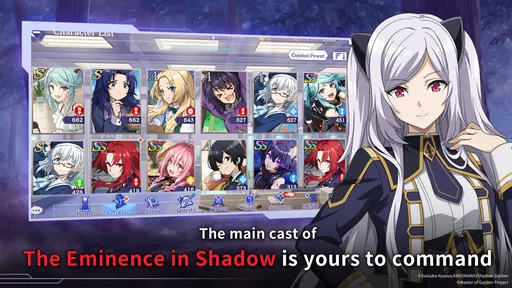
Another maintenance issue is roster management. Anime RPGs naturally encourage collecting, but more characters mean more decisions about development. I would keep a simple personal priority list: a main group for regular play, a few alternatives for specific problems, and everyone else waiting until there is a clear reason to invest. This prevents resources from being spread so thinly that no team feels reliable.
Players who change phones or use limited storage should also think about the practical side of keeping a live game installed. The title requires Android 8.0 or later, and the ongoing nature of the product means I would treat updates and available storage as part of the ownership experience. That is not a reason to avoid it, but it does make it less convenient than a small offline RPG that can be installed once and left untouched.
The age rating of Teen is worth considering for families as well. The anime-inspired fantasy tone may appeal to younger fans, but parents should make their own decision about whether the themes and purchase options fit the player. I would also enable device-level purchase safeguards for anyone sharing a phone or tablet. That is a basic precaution, yet it is especially sensible in a free game where optional items can be bought individually.
Where fatigue starts to appear
The first source of fatigue is repetition without a personal objective. Battles can be enjoyable when they support a clear plan, but less satisfying when they exist only to move a progress bar. Once the novelty of the characters settles, I notice the structure more clearly: improve the team, attempt the next challenge, gather more materials, and repeat. That loop is normal for the category, but it will not suit players who need constant mechanical surprises.
The second source is the tension between fandom and efficiency. I may want to use a favorite character even when another choice would make progression smoother. That conflict can be fun because it creates personal decisions, but it can also become frustrating if the game’s difficulty strongly rewards optimization. My solution is to separate “story team” and “serious progress team” whenever possible in my own play habits. One lets me enjoy the license; the other keeps difficult content from becoming unnecessarily slow.
Purchases are the third pressure point. The price range, from $0.99 to $99.99 per item, is broad enough that different players will experience the economy very differently. A careful free player can approach the game as a gradual hobby, while a collector may feel constant temptation. I would skip the game entirely if you know that character-focused purchases are difficult for you to resist. The anime connection makes those decisions more emotional than they would be in an unfamiliar fantasy game.
There is also a risk of fatigue for players who expect every update or new goal to transform the experience. This is still a mobile role-playing game built around repetition and progression. Its strength is consistency, not reinvention. I can keep enjoying it when I accept that the pleasure comes from steady development and familiar characters. I lose interest faster when I expect every session to deliver a major story revelation or a completely new way to play.
Finally, the game may not be the best fit for someone who wants a finished experience with no ongoing attention. A traditional single-player RPG lets me choose my own stopping point and return months later without feeling behind. This title is more comfortable as a continuing hobby. If that sounds appealing, its structure can be relaxing. If it sounds like another task competing for your attention, the initial anime appeal probably will not be enough.
Does it earn a permanent place on my phone?
The Eminence in Shadow RPG earns a place on my phone when I want a character-driven mobile game that works in short sessions and gives me a reason to keep improving a team. Its first-week appeal is genuine, and the anime setting is used effectively enough to make familiar progression feel more personal. The game is free, has a 4.4 average from around 38 thousand ratings, and has passed one million installs, which reflects a substantial audience rather than a tiny niche experiment.
Those figures do not change my main conclusion: popularity is less important than whether the routine matches your habits. I would recommend it to fans who enjoy collecting, gradual development, and returning to a favorite fantasy cast. I would also recommend it to casual RPG players who prefer several short sessions over one long campaign. The free starting point makes it easy to test that fit without committing money immediately.
I would skip it if you dislike gacha-style spending pressure, repeated battles, or the idea of maintaining a roster over time. I would also choose a premium RPG instead if my priority were deep exploration, a definitive ending, or a fully controlled adventure. This title is not trying to replace those experiences. Its value is in being a familiar world I can revisit, not in delivering the broadest or most independent role-playing game on mobile.
My final recommendation is to play slowly, keep purchases optional, and build toward clear personal goals. Give the game enough time to move past the opening excitement, then ask whether the regular loop still feels rewarding when no new character is demanding attention. For me, the answer is yes, but with limits: it works best as a measured anime RPG habit, not as a game that deserves every spare minute. That balance is what allows it to remain enjoyable after the novelty fades.
Pros
- Faithful characters and scenes make the anime-based story enjoyable.
- Team building offers plenty of room for experimenting with different roles.
- Frequent events provide extra rewards and limited-time content.
- Auto-battle and skip options make routine stages quicker to complete.
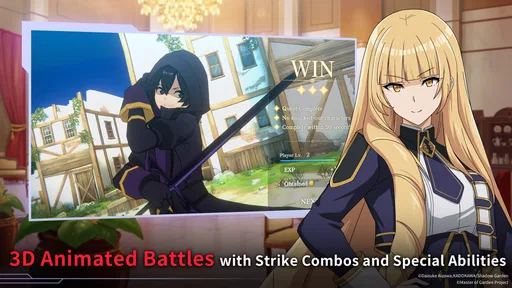
- Voice acting and polished animations add personality to major attacks.
Cons
- Progress can become heavily dependent on upgrading rare characters.
- Duplicate units and upgrade materials may take time to collect.
- Energy limits can interrupt longer play sessions.
- Some menus and systems feel overwhelming for new players.
- The download size and loading times may be demanding on older phones.
FAQs for The Eminence in Shadow RPG
What is The Eminence in Shadow RPG?
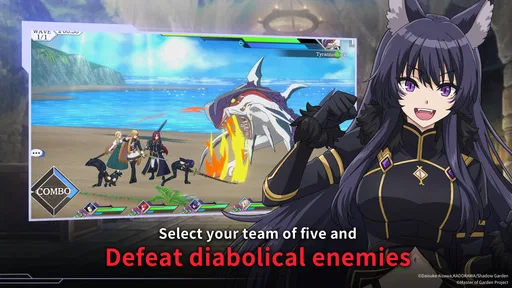
The Eminence in Shadow RPG is a mobile role-playing game based on the anime and light novel series The Eminence in Shadow. It combines story-driven scenes, turn-based battles, character collection, team building, and stylish special attacks. Players follow Shadow’s activities while recruiting familiar characters, upgrading their abilities, and taking part in missions inspired by the series. The game is designed for fans who enjoy anime adaptations with a strong focus on collectible heroes and dramatic combat.
Is The Eminence in Shadow RPG free to download and play?
The Eminence in Shadow RPG is generally free to download on supported Android and iOS devices, but it includes optional in-app purchases. These purchases can provide premium currency, character summons, upgrade materials, costumes, or other limited-time rewards. You can progress without spending money, although obtaining specific high-rarity characters and keeping up with event content may require patience. Before downloading, check the store listing for the current device requirements and available purchase options.
Does The Eminence in Shadow RPG require an internet connection?
Yes, an active internet connection is normally required to play The Eminence in Shadow RPG. Online access is used for account data, events, summons, updates, rankings, purchases, and server-based gameplay features. Because of this, the game is not a suitable choice for completely offline play. A stable Wi-Fi or mobile data connection is recommended, particularly when downloading additional files, watching story content, or participating in time-limited events.
What type of gameplay and progression does the game offer?
The game focuses on assembling a team of characters and using their strengths effectively in turn-based battles. You can improve heroes through levels, equipment, skills, awakening systems, and other progression features, while team composition and elemental or role-based advantages often influence the outcome of a fight. Alongside the main story, players can usually find daily activities, special events, challenge stages, and competitive features that provide additional rewards and long-term goals.
Can beginners enjoy The Eminence in Shadow RPG without knowing the anime?
Beginners can play The Eminence in Shadow RPG without prior knowledge of the anime, since the game introduces its main characters and setting through story scenes and tutorials. However, viewers familiar with the original series will likely appreciate the references, character relationships, humor, and recreated moments more deeply. New players should expect several systems to learn, including summons, upgrades, team roles, and event mechanics, but the early tutorial helps explain the basic controls and progression.


